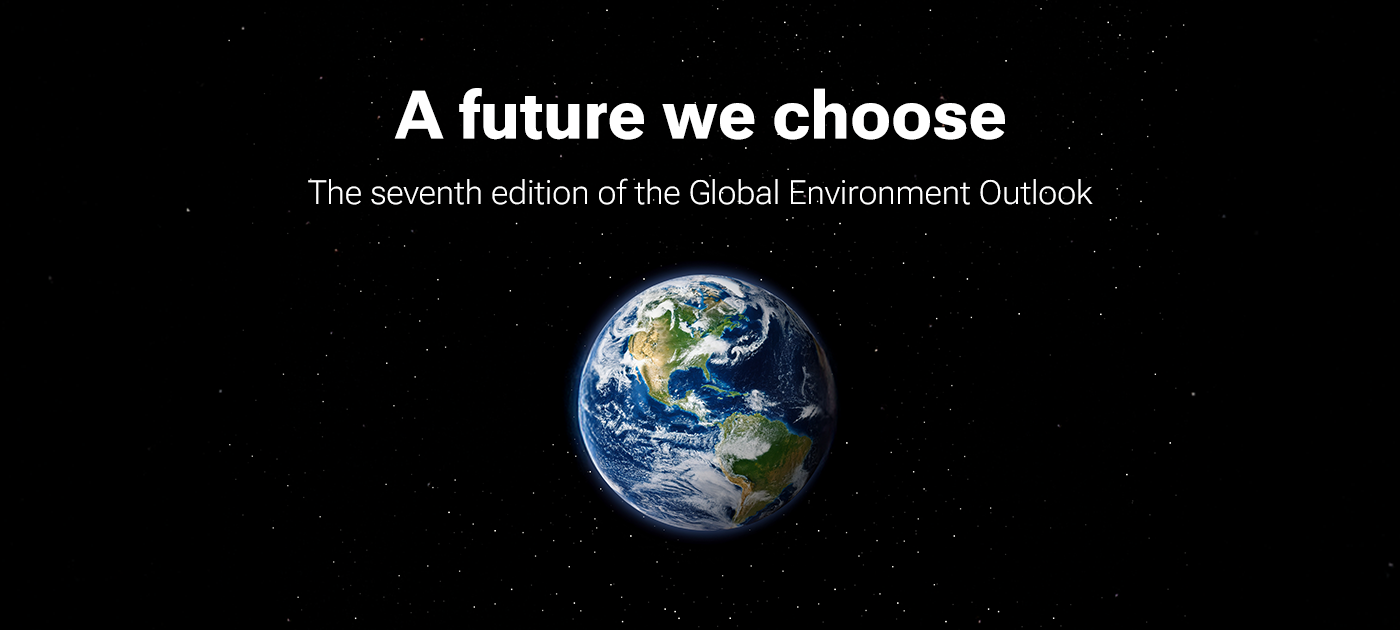
GEO-7 is UNEP’s most comprehensive and ambitious global environmental assessment, produced by 287 multidisciplinary scientists from 82 countries. The report examines the state of the global environment and outlines pathways to transform public policy across key areas including climate change, health, food systems, energy, circular economy, and waste management. Its goal is to guide governments and societies toward decisions that can effectively address today’s planetary crises.
For megadiverse countries like Peru, home to multiple Indigenous Peoples, GEO-7 delivers a clear message: the world needs a paradigm shift that places health at the center, not only human health but also the health of territories and ecosystems. Achieving this requires collective action across governments, civil society, academia, and the private sector, alongside the meaningful recognition and inclusion of Indigenous and Local Knowledge to ensure a just transition for both the planet and Indigenous Peoples.
Leadership and Contributions by Dr. Carol Zavaleta Cortijo
Dr. Zavaleta, a faculty researcher at Universidad Peruana Cayetano Heredia and a leading expert in Indigenous health, local knowledge, and climate change, played a pivotal role in GEO-7:
- Lead Author of Chapeau C, focusing on knowledge co-creation, intercultural dialogue, and inclusive approaches to environmental decision-making.
- Contributor to Chapters 3, 11, and 12, with Chapter 3 explicitly addressing Indigenous health in the context of environmental change.
- Member of the Indigenous and Local Knowledge Taskforce, ensuring these knowledge systems were meaningfully integrated throughout the report—an essential milestone for a global assessment of this scale.
- Her leadership elevated perspectives from the Global South and highlighted the fundamental role of Indigenous Peoples in understanding and addressing environmental crises.
Through this work, Dr. Zavaleta’s contribution positions Peru, and Indigenous-led research, at the forefront of global environmental science and policy dialogue.
IPON Youth Participation: Victoria Chicmana-Zapata
IPON collaborator Victoria Chicmana-Zapata, sociologist and researcher, was selected as a Scientific Fellow supporting the Indigenous and Local Knowledge Taskforce during the GEO-7 process. Reflecting on her experience, she highlights how Indigenous Peoples’ knowledge is essential for confronting environmental crises and how fair, respectful integration of this knowledge can help shape sustainable and resilient futures.
IPON celebrates this achievement and reaffirms its commitment to Indigenous-led research, environmental justice, and collaborative pathways toward sustainable futures.